Unveiling TV Display Technology: From LCD to MicroLED — The Evolution That’s Redefining How We Watch
Unveiling TV Display Technology: From LCD to MicroLED — The Evolution That’s Redefining How We Watch
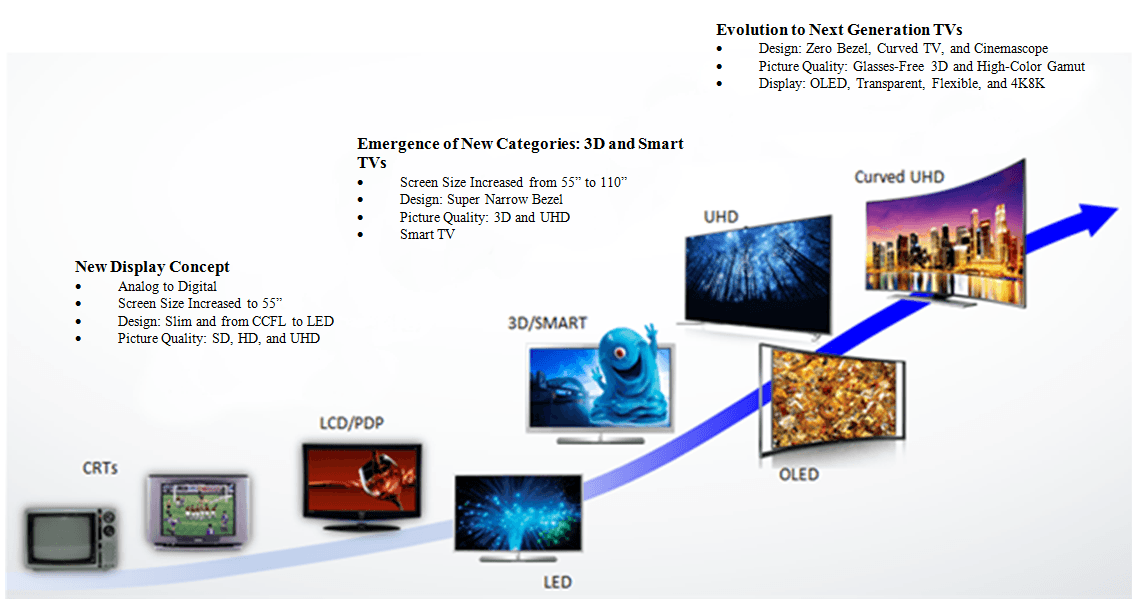
The world of televised entertainment is undergoing a silent revolution—one powered by rapid innovation in display technology. From the bulky, energy-hungry LCDs of the early 2000s to today’s razor-sharp, ultra-vibrant MicroLED panels, the journey from one paradigm to the next is transforming the very fabric of how we consume visual content. This evolution isn’t just about brighter screens or sharper clarity—it’s about redefining immersion, efficiency, and design, setting a new standard for home and professional viewing.
As MicroLED emerges as the next frontier, the transformation reshaping home entertainment is as profound as it is inevitable.
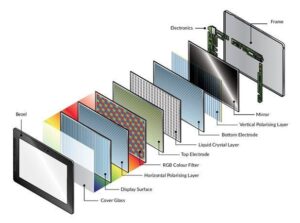
Early days of flat-panel TVs were dominated by LCD (Liquid Crystal Display) panels, celebrated for their slim profiles and lower cost compared to CRT and plasma. LCD technology relied on backlights to illuminate liquid crystals sandwiched between glass layers, enabling dynamic image control.
While LCDs delivered a marked improvement in weight and power consumption, their performance remained limited by fixed pixel structures and backlight bleed, often resulting in washed-out blacks and lower contrast. “For years, LCDs dominated the market,” notes Dr. Elena Torres, display technology expert at Quantum Vision Research.
“But they hit a ceiling—physically, in terms of how dense pixels could be and how clean true black levels could be.”
Around the mid-2010s, OLED (Organic Light-Emitting Diode) technology began displacing LCDs in premium segments, ushering in a new era of self-emissive pixels that delivered deeper blacks, wider color gamuts, and both improved viewing angles and faster response times. But as OLED matured, limitations emerged—particularly in brightness and long-term durability under repeated full-white emission. “OLEDs perform impressively in dark rooms but face challenges with burn-in and sustained brightness levels over time,” observes Mark Chen, senior engineer at VisionForge Labs.
“These constraints pushed manufacturers to explore alternatives with fundamentally better efficiency and stability.”
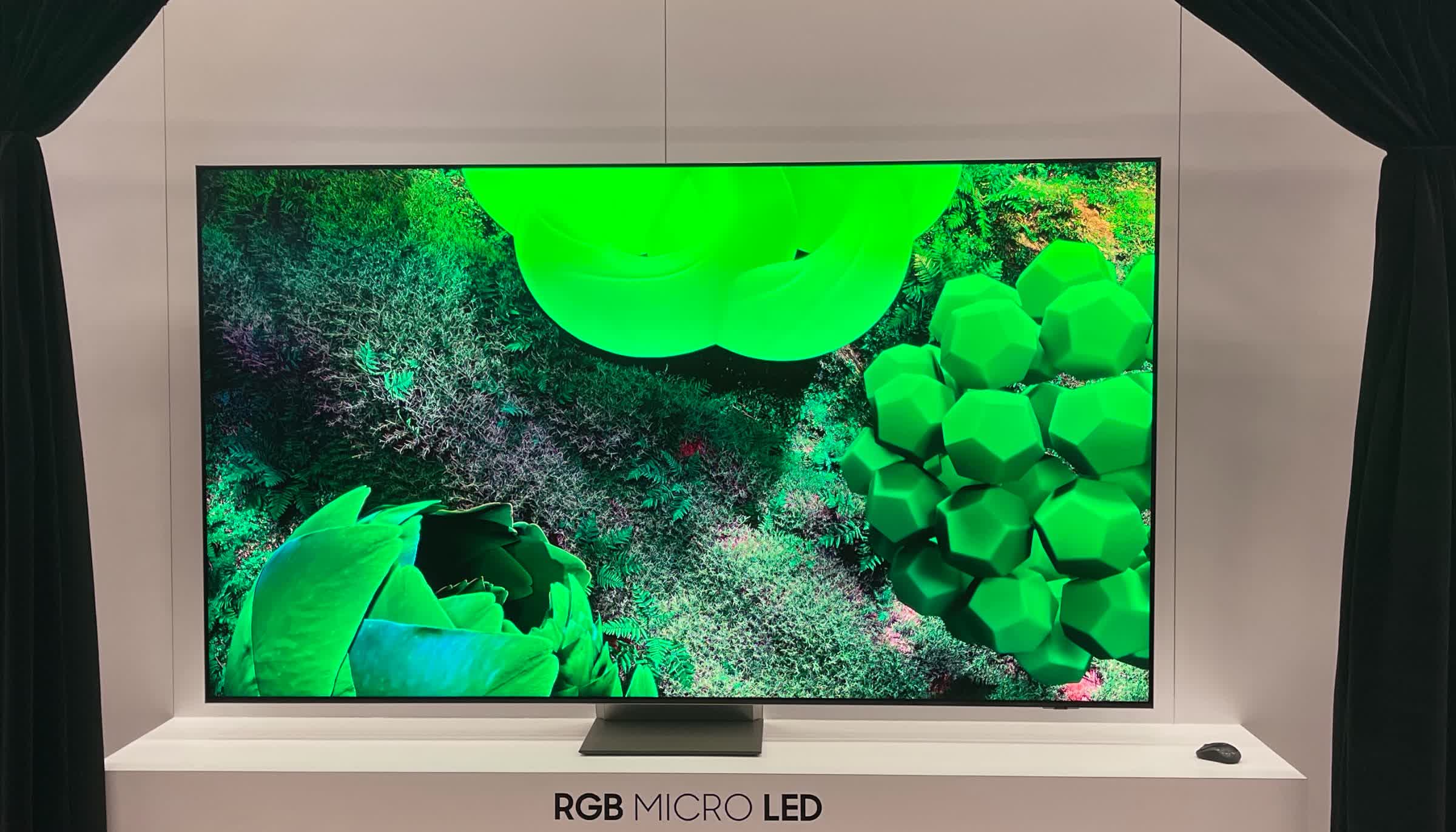
Enter MicroLED—a quantum leap forward in display physics. Unlike LCDs and OLEDs, MicroLED employs microscopic pixels made from inorganic semiconductor materials, each emitting its own light. With pixel sizes measured in just a few micrometers, MicroLED offers exceptional brightness, persistence, and energy efficiency.
Unlike legacy technologies that require complex backlight units or degrade over time, MicroLED pixels are inherently stable and ultra-durable, capable of sustaining peak brightness levels across decades of use. The result: a display that’s not just vibrant but reliably consistent, with dynamic contrast ratios approaching infinite levels between deep shadow and sheer white.
Polymer-fill, transfer-printed, and chip-on-glass approaches are advancing rapidly, enabling mass production of micro-scale LEDs with micron-level precision.
“The scalability of MicroLED is no longer theoretical,” states Dr. Rajiv Mehta, CTO at NeoDisplay Innovations. “We’re now achieving sub-10-micron pixel arrays with uniformity and yield rates that were once science fiction.
This is where micro-LED transitions from prototype to mass-market viability.”
Key performance benchmarks distinguish MicroLED from its predecessors: - **Brightness:** MicroLED panels routinely exceed 1,500 nits—nearly twice the peak brightness of high-end OLEDs—enabling flawless HDR and outdoor visibility. - **Contrast Ratio:** With true micro-dimming and near-perfect black reference via pixel off, contrast ratios climb into the theoretical maximum, surpassing 10,000,000:1. - **Energy Efficiency:** Infinite per-pixel emissive control reduces power waste, cutting energy use by up to 40% compared to OLED in bright environments.
- **Lifespan:** With no buscaidronic drift or burn-in risk, MicroLED panels maintain performance for 100,000 hours or more—an order of magnitude longer than current OLEDs. - **Thickness & Form Factor:** At pixel-scale thickness, MicroLED enables ultra-thin bezel designs, curved and even flexible or transparent screens—opening novel aesthetic and ergonomic possibilities.
The shift from LCD to MicroLED isn’t merely a product upgrade; it represents a fundamental rethinking of display architecture.
LCDs, rooted in liquid crystal modulation, impose inherent limits on peak brightness and contrast. OLEDs, while elegant in their direct emission, remain constrained by material longevity and fixed black states. MicroLED, by contrast, leverages the resilience and scalability of semiconductor manufacturing, unlocking performance previously unachievable at scale.
Early adoption is already evident in niche markets—high-end automotive displays, professional monitors, and luxury home cinemas are leading the charge. Luxury brands like LG and Sony have introduced MicroLED prototypes, highlighting not just visual dominance but the architectural freedom enabled by pixel-level control. “Imagine a TV that’s as quiet as a whisper, brighter than sunlight, and so vivid it feels like watching cinema in your living room,” says Sony display engineer Hiroshi Tanaka.
“MicroLED isn’t just incremental—think of it as a reimagining of what a screen *can be*.”
Despite these advances, widespread consumer rollout faces hurdles. The precision required for micro-scale pixel transfer and yield optimization remains a barrier to cost-competitive mass production. Harvesting defective pixels without ruining functionality demands robotics and AI-assisted quality control systems still in refinement.
“The economics of volume matter,” warns industry analyst Lisa Park of Futurescope Displays. “Until manufacturing yields exceed 90%—a threshold still fragile— MicroLED remains a premium offering, not yet accessible to the average household.”
Yet the momentum is undeniable. Consumer demand for sharper visuals, brighter brightness, and longer durability aligns perfectly with MicroLED’s strengths.
As research accelerates and supply chains mature, affordability is projected within the next full decade—coinciding with the natural replacement cycle of current display generations. “We’re witnessing a generational shift, akin to the transition from CRT to LCD,” Dr. Torres reflects.
“MicroLED isn’t the end of an era—it’s the foundation of the next era: where thumbnails become immersive ecosystems, and every pixel tells a story in flawless detail.”
Unveiling TV display technology today means understanding that MicroLED is more than a new screen—it’s a new language of light. From LCD’s steady rise to MicroLED’s bold departure, each leap has been driven by a singular pursuit: to bring the image to life with unprecedented truth. As the curtain draws back on old paradigms, the future of home viewing shines clearer, brighter, and more vivid than ever.
The evolutionary arc is complete—and we’re just beginning to glimpse its full potential.

Related Post

Who Is Mercedes Kilmer? All You Need to Know About a Rising Voice in Entertainment

Unveiling the Depth of Shia Labeouf and Dad Relationship: Legacy, Bonds, and Cultural Resonance

Casey Davidson & Amy Waters Davidson: Architects of Modern Interdisciplinary Science

I Miss You Meme Funny: A Comprehensive Guide to the Best Memes That Capture Longing


