Rachel Longaker: Pioneering the Push for Equitable Healthcare Access in Rural America
Rachel Longaker: Pioneering the Push for Equitable Healthcare Access in Rural America
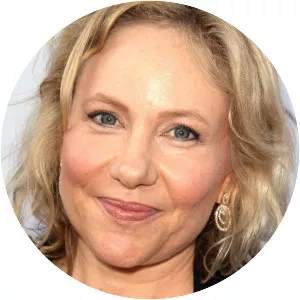
A formidable advocate reshaping rural health policy, Rachel Longaker stands at the vanguard of efforts to expand access to quality medical care in underserved regions. With a career rooted in public health research and policy innovation, Longaker has dedicated decades to addressing systemic inequities that leave millions of Americans behind. Her work merges rigorous data analysis with deep empathy, spotlighting how geography, income, and infrastructure converge to limit care, and proposing actionable solutions grounded in real-world impact.
By centering strategy, collaboration, and community voices, she is redefining what responsible healthcare delivery can and must be across America’s most isolated frontiers.
Rachel Longaker’s influence begins with a clear diagnosis: rural America faces a healthcare crisis defined by scarcity. Her landmark research reveals staggering disparities — populations in remote areas often encounter long travel times to clinics, shortages of specialists, and inadequate funding for essential services.
“Every mile and every discarded appointment represents a life unmet,” Longaker observes, citing data showing rural residents drive over 30% farther for care than urban counterparts, a burden that deepens chronic conditions and reduces life expectancy. These gaps aren’t just logistical; they reflect broader socioeconomic fractures that demand systemic intervention.
At the heart of Longaker’s approach is a data-first philosophy, using granular, localized information to drive policy.
She pioneered the use of geospatial mapping to identify “health deserts” — ZIP codes where primary care providers are scarce or absent — enabling targeted resource allocation. Her work with academic institutions and state health departments has led to the expansion of telehealth programs tailored to rural digital infrastructure, reducing travel burdens and increasing early intervention rates. “We’re not just building better systems — we’re building trust,” she explains, emphasizing that sustainable change requires cultural sensitivity and partnership with local providers.
Key to Longaker’s success is her ability to bridge research and implementation. She co-developed the Rural Health Equity Index (RHEI), a comprehensive tool measuring access, outcomes, and social determinants across rural communities. Adopted by multiple state agencies, the RHEI guides funding priorities and policy rollout, ensuring that investments target the most vulnerable areas.
Her advocacy also extends to telemedicine parity laws, pushing for reimbursement parity between in-person and virtual care — a reform that has already expanded mental health services to remote populations previously excluded from consistent support.
Longaker’s influence extends beyond statistics and legislation into grassroots empowerment. She frequently collaborates with community health workers, faith-based organizations, and tribal leaders to deliver culturally competent care.
“Local heroes are the backbone of rural resilience,” she notes, highlighting the way trusted community figures often become trusted health navigators, reducing stigma and improving patient engagement. This model has proven particularly effective in addressing chronic diseases like diabetes and hypertension, where consistent follow-up and preventive counseling are critical.
The breadth of Longaker’s impact is reflected in policy victories and real-world outcomes.
States adopting her frameworks report measurable gains: reduced emergency room visits, shorter wait times, and improved chronic disease management. Yet she remains acutely aware of ongoing challenges — aging infrastructure, provider recruitment shortages, and persistent broadband gaps that hinder telehealth’s full potential. “We must build not only clinics, but entire ecosystems of care,” she urges, calling for integrated care models that combine medical, social, and technological resources.
Longaker’s career exemplifies a rare fusion of analytical rigor and human-centered advocacy. By grounding innovation in lived experience, she has not only illuminated healthcare inequities but charted a path toward equitable solutions. In an era defined by division, her work reminds us that progress in rural health hinges on empathy, precision, and sustained commitment.
As rural America continues to grapple with access barriers, Rachel Longaker stands not just as a researcher or policymaker — but as a steward of vital connection, ensuring that no community is left behind in the journey toward better health for all.



Related Post

Unraveling The Life of Rachel Longaker and Her Husband: A Legacy Forged in Grit and Quiet Strength

Rachel Longaker: Shaping Rural Health Innovation and Equity Through Visionary Leadership

Bank of America vs. Wells Fargo: Checking Accounts Compared — The Definitive Battle for Your Wallet

The Visual Engine Behind Innovation: How Reyesconnect Reyesholdings Powers Visual Democracy with Alamy’s Stock Photography